
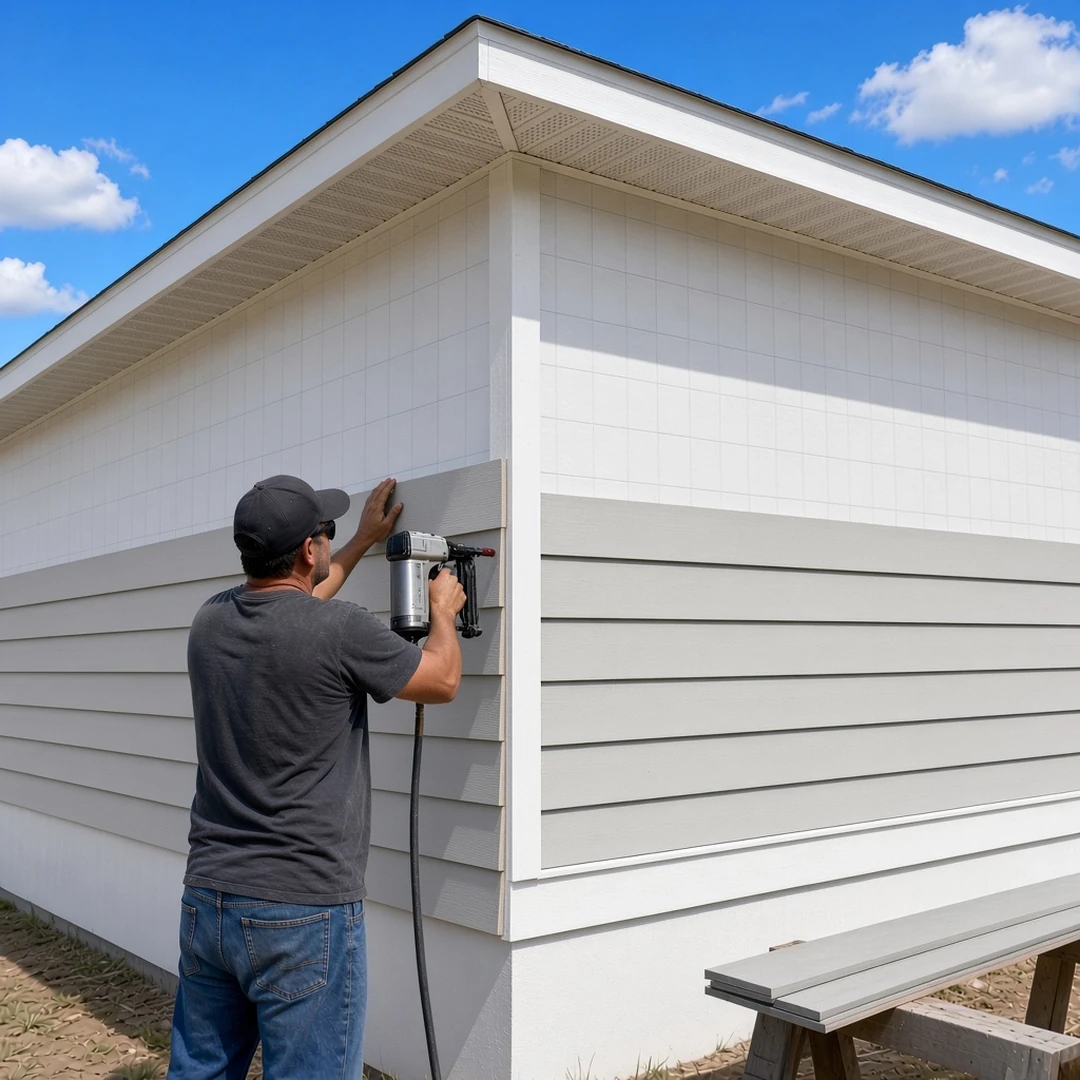
Siding installation is the work of cladding a home's exterior walls — on new construction, an addition, or a full re-clad of an existing house. In Texas it is as much about what goes behind the panels as the panels themselves: the water-resistive barrier, the flashing at every opening, and a material matched to a climate that swings from North Texas hail to Gulf Coast humidity to Hill Country sun. This page explains what a proper installation involves and how to judge an installer. Siding Pros TX lists siding contractors across the state by city.
What a siding installation actually involves
A sound installation is a system, not just a surface. On a Texas home it generally runs in this order:
- Prep and tear-off (on a re-clad): removing old cladding down to the sheathing, then inspecting the sheathing and framing for moisture damage, rot, or pest activity and correcting it before anything new goes on.
- Water-resistive barrier: a house wrap or equivalent over the sheathing, lapped correctly so water sheds downward.
- Flashing: metal and membrane flashing at windows, doors, penetrations, and transitions — the detail that decides whether wind-driven rain reaches the wall.
- Cladding: the siding itself, fastened to manufacturer spec with the correct gaps, fasteners, and clearances.
- Trim, caulk, and finish: corners, soffits, fascia, sealant at joints, and paint or a factory finish.
Skipping or rushing the barrier-and-flashing stage is the most common cause of callbacks, because the damage hides behind a wall that looks finished.
Choosing a material for the Texas climate
Texas is not one climate, and the right material depends on where the home sits:
- Fiber cement — the most popular choice statewide. It resists heat, holds paint for years, stands up to hail better than vinyl, and does not rot in humidity, which makes it a strong default from Dallas–Fort Worth to Houston.
- Engineered wood — a dimensionally stable, rot-resistant wood look, well suited to Hill Country and wooded, humid areas where a natural appearance matters.
- Vinyl — the budget option; it installs quickly and never needs paint, but it is the first material to crack under hail and the shortest-lived under intense sun.
- Stucco and EIFS — common on Central Texas and newer Houston-area elevations; durable when the flashing and moisture details are done right.
- Brick veneer — low-maintenance and widespread, though it moves with the region's expansive clay and can crack as a slab shifts.
A good installer will weigh the home's exposure, the local soil, and how long the owner plans to stay, rather than defaulting to one product.
Texas-specific factors that shape the install
- Hail country (North and Central Texas): impact-resistant materials and careful fastening matter in the Dallas–Fort Worth and Austin storm belts, where spring hail is routine.
- Gulf humidity (Houston and the coast): moisture and heat rot wood and shorten vinyl's life, so rot-resistant cladding and tight flashing carry extra weight.
- Expansive clay (much of the state): homes shift seasonally on Blackland and Gulf Coast clays, which is why rigid cladding needs correct clearances and why cracks should be judged for whether they trace to the foundation.
- Intense sun: south- and west-facing walls fade and bake, favoring materials with a long finish life.
What to look for in a Texas siding installer
Texas has no state siding license, so the burden is on the homeowner to vet. Confirm:
- General liability insurance, verified directly with the insurer rather than from a certificate photo.
- A verifiable local track record — named jobs in the area, not just a storm-season phone number.
- A written, whole-wall scope covering sheathing, water-resistive barrier, and flashing, not just the visible panels.
- The right material for the home's exposure, explained in plain terms.
- No offers to absorb your insurance deductible — that is illegal in Texas and a sign to look elsewhere.
Find a siding installer near you
Siding Pros TX organizes siding contractors by Texas city, so you can see who serves your area. Browse your city to find local installers.
Call Us Now for Siding Installation in Texas
Planning new siding, an addition, or a full re-clad? Call Us Now and get connected with a siding contractor serving your part of Texas.