
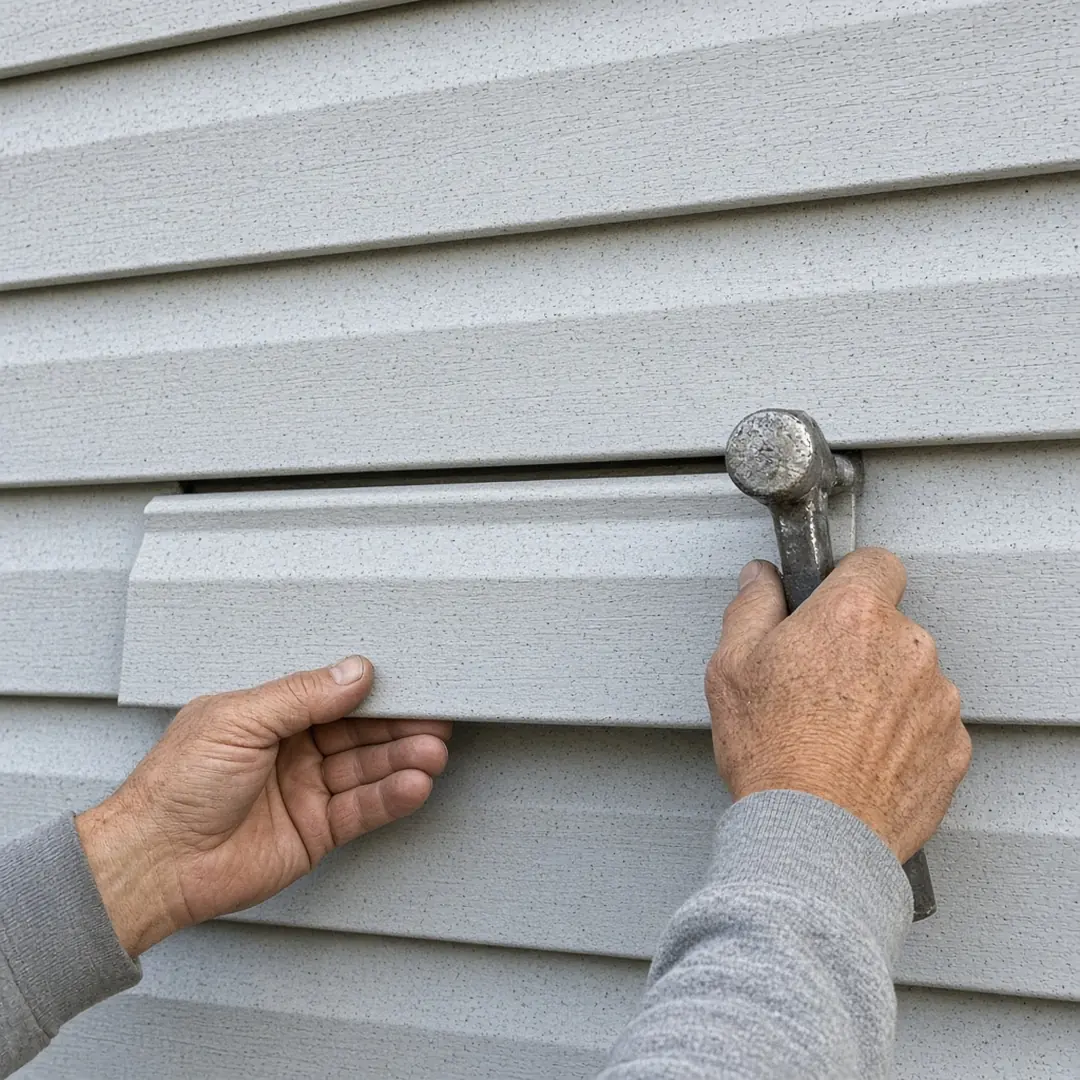
Siding repair is targeted work to fix damaged or worn sections of cladding while keeping the rest of the wall — the practical choice when the problem is confined rather than whole-house. On Texas homes the usual culprits are hail-cracked panels in the north, rot in the humid south, and the loose trim, failed caulk, and stair-step cracks that the state's shifting clay soils produce everywhere. This page explains what repair covers and when it is enough. Siding Pros TX lists siding repair contractors across Texas by city.
Common siding repairs on Texas homes
- Hail-cracked and dented panels — routine after spring storms in the Dallas–Fort Worth and Austin hail belts.
- Rotted or swollen boards — soft, delaminating wood and hardboard, most common in Houston and the humid Gulf Coast, commonly at bottom courses and around windows.
- Loose, cracked, or missing panels — from wind, impact, or age.
- Failed caulk and flashing — open joints at corners, trim, and penetrations that let water in.
- Stair-step cracks in brick or stucco — a signal of foundation movement on expansive clay, which should be assessed before it is simply sealed.
What a siding repair involves
A good repair does more than cover the visible damage — it finds and stops the cause:
- Diagnosis: identifying whether the damage is isolated or a symptom of a bigger problem (widespread rot, or a crack tracing to the foundation).
- Removing the damaged section and checking the sheathing and framing behind it for moisture or rot.
- Correcting the substrate where needed — drying the wall, replacing bad sheathing, fixing flashing.
- Installing matching material so the repair blends with the surrounding cladding.
- Sealing and finishing joints and paint so the repair is weather-tight and not an eyesore.
Matching existing siding — especially on older or discontinued profiles — is part of the skill; a careless repair that does not match stands out and can read as a patch job.
When repair is enough, and when it isn't
Repair is the right call when damage is limited to a few sections and the rest of the cladding is sound. It stops being enough when:
- Rot or cracking has spread across most of the house.
- Original cladding has aged out and keeps failing in new spots.
- Repeated repairs no longer hold.
In those cases replacement is commonly the more durable path. A trustworthy contractor will say so rather than selling repeat repairs on a wall that needs retiring — and, equally, will not push a full re-clad when a repair would do.
Texas-specific repair notes
- Hail (North and Central Texas): because the roof shows the obvious damage first, wall damage is frequently found only when an adjuster is already on site after a claim — so siding should be inspected alongside the roof.
- Humidity (Houston and the coast): rot can advance behind cladding that looks fine, so repairs focus on finding the moisture path and drying the wall, not just swapping a board.
- Clay soils (statewide): a stair-step crack in brick or stucco is commonly the ground moving, not a cladding fault, and should be judged for whether it is cosmetic or structural before repair.
What to look for in a repair contractor
Texas has no state siding license, so confirm the following yourself:
- General liability insurance, verified directly with the insurer.
- A verifiable local track record, not just a storm-season phone number.
- Material-matching ability, so the repair blends with your existing siding.
- Honest repair-versus-replace guidance for your specific situation.
- No offers to absorb your insurance deductible — that is illegal in Texas and a red flag.
Find a repair contractor near you
Browse your Texas city on Siding Pros TX to see the siding repair contractors who serve your area.
Call Us Now for Siding Repair in Texas
Have hail damage, rot, or a few failing panels? Call Us Now and get connected with a siding repair contractor serving your part of Texas.