
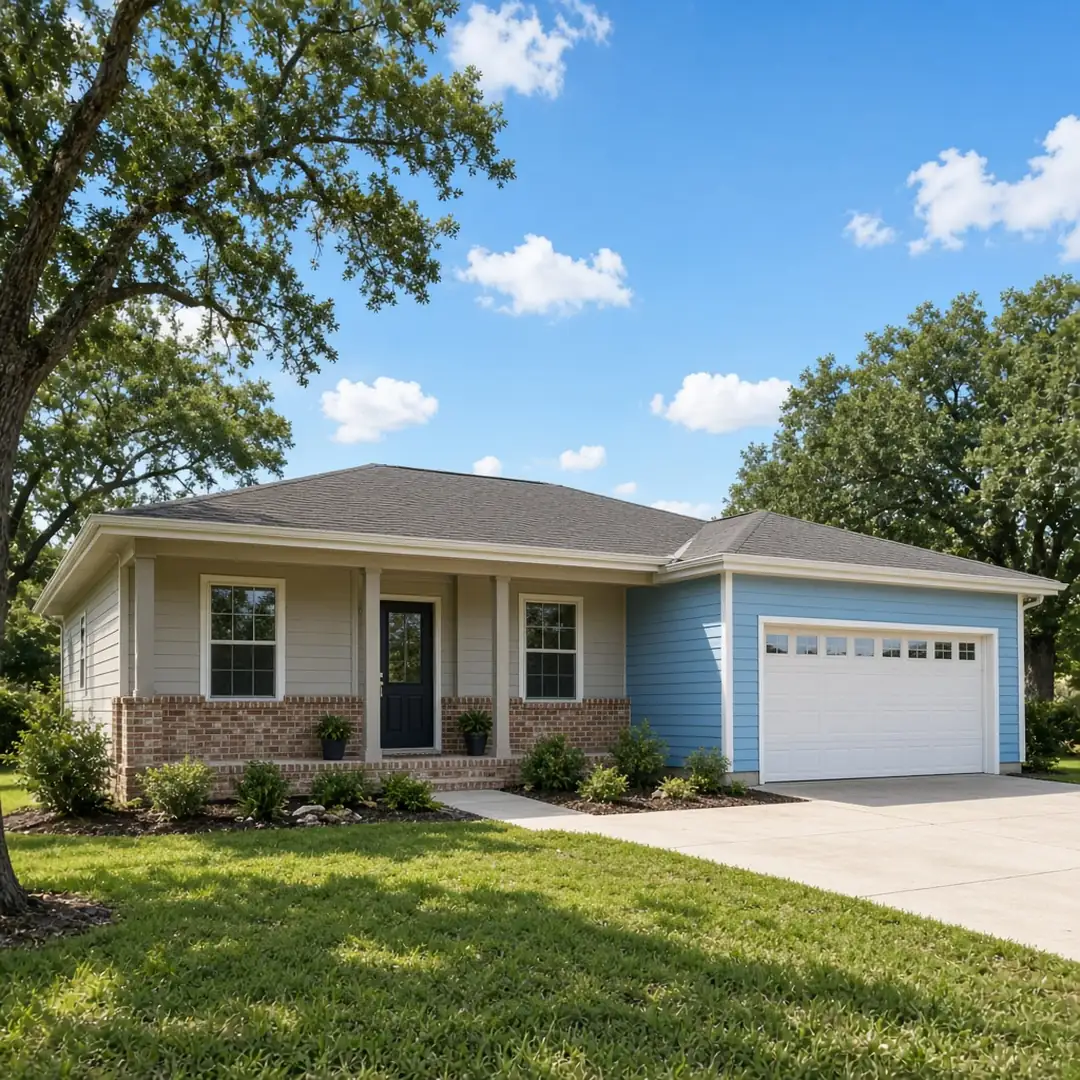
There is no single best siding for Texas, because Texas is not one climate. The arid heat of West Texas, the hail corridor of the north, and the humid, hurricane-exposed Gulf Coast each put different stress on a wall. What they share is intensity: months of triple-digit heat, some of the most frequent hail in the country, and UV exposure that ages exteriors faster than almost anywhere else. This guide compares the five materials Texas homeowners actually choose between, and where each one fits. Call Us Now to reach a siding contractor who can match the material to your home.
The short answer
For most of Texas, fiber cement is the strongest all-round choice: it resists heat, hail, UV, rot, and termites, and holds its color far longer than vinyl. Brick remains the regional default and the lowest-maintenance option. Vinyl is the budget pick where sun and hail are less severe. Stucco suits the dry west. Engineered wood is the middle ground for a wood look. The right one depends on your region, your home's sun exposure, and your budget.
How Texas weather decides the material
Three forces drive the decision. Heat and UV break down plastic-based materials, fading color and making panels brittle, and they hit south- and west-facing walls hardest. Hail cracks and punctures siding, so impact resistance matters most in the northern half of the state. Humidity and wind-driven rain, heaviest along the Gulf, attack any material whose installation lets water behind it. A material that is ideal in El Paso can be the wrong call in Houston, which is why region matters as much as the material itself.
The five materials
Fiber cement
Fiber cement is a mix of Portland cement, sand, and cellulose fiber, and it is the material most consistently recommended across Texas. It will not warp or soften in extreme heat, it resists rot, termites, and moisture, and factory-finished boards hold their color for well over a decade even on sun-baked walls. It comes in lap, panel, and shingle-look profiles and can mimic wood. The trade-offs: it is heavy, it costs more to install than vinyl, and cutting it requires special blades, so the install quality depends heavily on the crew. For a homeowner who wants one material that handles heat, hail, and humidity together, it is the default answer.
Vinyl
Vinyl is the most affordable and lowest-maintenance option, and modern UV-stabilized vinyl performs acceptably across much of Texas. It installs quickly and comes in many colors and profiles. Its two weaknesses line up exactly with Texas conditions: sustained extreme heat can warp it, and intense sun fades it faster than fiber cement, with south- and west-facing walls showing noticeable fading within roughly ten to twelve years in Central Texas. It is a sound, budget-conscious choice for homes outside the harshest sun and hail belts, and light colors outlast dark ones.
Brick and stone veneer
Brick is the Texas standard. In the Texas-Oklahoma region, 62% of new single-family homes use brick or brick veneer, according to the National Association of Home Builders. It shrugs off heat, hail, and UV and lasts for decades with almost no maintenance, which is why it became the regional norm. Most homes use brick veneer — a facing layer over a framed wall — rather than solid brick. Stone and stone-look veneer are used the same way, often as accents. The trade-offs are higher upfront cost and the fact that it is masonry, a separate trade from panel siding. For lowest lifetime maintenance in Texas, brick is hard to beat.
Stucco
Stucco suits the dry western part of the state, where the arid climate keeps moisture problems down and the look fits Southwestern and Mediterranean homes. Applied correctly it is durable, fire-resistant, and low-maintenance. In humid East and coastal Texas, stucco is riskier: without careful detailing and proper drainage behind the coat, trapped moisture leads to cracking and staining. Stucco is a regional match for West and parts of Central Texas, and a material that demands an experienced installer everywhere else.
Engineered wood
Engineered wood siding, such as treated-strand products, delivers the warm look of real wood with far more resistance to heat, moisture, and pests than natural cedar. It installs much like fiber cement but weighs less, and it holds up well in Southern climates. It sits between vinyl and fiber cement on both cost and durability, and it is the choice for homeowners who want a genuine wood grain without the upkeep real wood demands in the Texas sun.
Why installation matters as much as the material
The material you pick sets the ceiling on performance; the installation decides whether you reach it. In Texas conditions, a premium board installed badly fails faster than a budget board installed right, because the parts that protect a wall are the ones you never see.
Three layers behind the siding carry most of that load. The water-resistive barrier — house wrap or a comparable membrane — is the drainage plane that sheds any water that gets past the panels; on the Gulf Coast and in the hail corridor, it is what keeps a wet wall from becoming a rotted one. Flashing at windows, doors, roof-wall junctions, and penetrations directs water back out instead of into the framing, and missing or reversed flashing is the single most common source of hidden siding rot in Texas. A rainscreen gap — a small ventilated space behind the cladding — lets a wall dry after wind-driven rain, which matters most in humid East and coastal Texas.
Fastening and expansion are the other half. Fiber cement and engineered wood expand and contract with heat, so correct gapping and fastener placement prevent the buckling and seam failures that show up on sun-baked Texas walls. This is why the quality of the crew matters as much as the brand on the box, and why a written scope should describe the barrier, flashing, and fastening — not just the panels.
Quick comparison
| Material | Heat/UV | Hail resistance | Humidity/rot | Maintenance | Relative cost |
|---|---|---|---|---|---|
| Fiber cement | Excellent | Strong | Excellent | Low | Mid-high |
| Vinyl | Fair (fades) | Weaker | Good | Very low | Low |
| Brick/stone veneer | Excellent | Excellent | Excellent | Very low | High |
| Stucco | Good | Fair | Poor in humid areas | Low-mid | Mid |
| Engineered wood | Good | Good | Good | Low-mid | Mid |
Best choice by Texas region
- North Texas (Dallas-Fort Worth, hail corridor): impact resistance leads. Fiber cement and brick handle the hail and heat; vinyl is the weakest fit here.
- Central Texas (Austin metro, extreme heat and UV): heat and fade resistance lead. Fiber cement dominates new construction; brick is the low-maintenance alternative.
- West Texas (arid heat): stucco is a natural fit; fiber cement also excels against UV and wind.
- Gulf Coast and East Texas (humidity, hurricanes, salt air): moisture and wind resistance lead. Fiber cement and brick outperform; vinyl and poorly installed stucco struggle.
Color matters everywhere in Texas: lighter shades run cooler and fade less than dark ones on sun-facing walls, regardless of material.
How long each material lasts in Texas
Service life depends on install quality and exposure, but the materials fall into clear bands under Texas conditions. Brick and stone veneer last the life of the house — decades — with almost no maintenance. Fiber cement runs 30 years or more, with factory ColorPlus finishes holding well past a decade before a repaint is worth considering. Engineered wood lands in a similar long range when kept sealed. Stucco lasts decades in the dry west but far less in humid regions where trapped moisture cracks it. Vinyl is the shortest-lived of the group on sun-facing Texas walls, where fading and heat warping shorten its useful appearance well before the panel itself fails.
The practical takeaway: on a wall that takes full afternoon sun, or in the hail corridor, paying more upfront for a material that lasts twice as long is frequently the cheaper decision across the life of the house. In a shaded or milder exposure, a lower-cost material can make sense.
Common mistakes Texas homeowners make
A few recurring errors cost Texas homeowners the most:
- Choosing by price alone on a high-sun wall. The cheapest material on a south- or west-facing Texas wall frequently becomes the first one to fade, warp, and need replacing.
- Dark colors on sun-baked elevations. Dark siding absorbs more heat and shows fading faster; it is a styling choice that carries a real durability cost in Texas sun.
- Ignoring the wall behind the panels. A beautiful new surface over a failed water-resistive barrier or missing flashing traps the next storm's water inside the wall.
- Matching the neighbor instead of the exposure. Two homes on the same street can need different materials if one faces the afternoon sun and the other is shaded.
- Treating stucco as a universal Texas look. Stucco fits the arid west; in humid or coastal Texas it demands drainage detailing that many installs skip.
Call Us Now to reach a siding contractor who can match the right material to your home and region.
Call Us Now for Siding in Texas
Once you know which material fits your home and region, the next step is a contractor who installs it well. Siding Pros TX helps you reach siding contractors across Texas. Call Us Now, or see siding contractors in Texas for how the work is done.